

Marvel Rivals Strategist Guide – Advanced Tactics That Feel Like Cheating

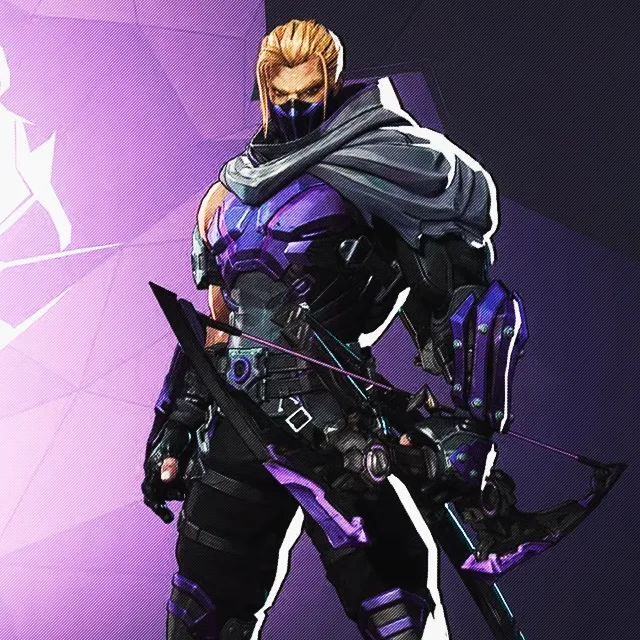
Hello, Guys, It’s Librarian Husky. To most players, support is the easy role to play. And after reaching GM on every support with an eternity peak on my main, I’m here to tell you everyone is right. Support is mad easy.
The Secret to Successful Support Play
Don’t get me wrong, there are a ton of challenges that come along with playing support at a really high level. Some of those DPS guys don’t quite understand that. I’m not going to name names. At the same time, it ain’t rocket science. Y’all tend to make it harder than it actually is. Don’t worry, I’m about to give you the secret sauce so that you can cook on support. Tank and DPS players, stay with me now.
I know we aren’t talking about your babies, Psylock and Magneto, but there will be games that no one heals you or they just suck because they didn’t watch this article, but you did. If you watch, you can step up to the plate and carry if you need. Let’s begin.
Before we delve into the nitty-gritty of different situations, it is important to understand what your goal is on support. Everything you do on support needs to satisfy accomplishing this one goal, and that is to charge your ultimate as fast as humanly possible. This is contrary to the goal everyone tells you, just heal the team and don’t get picked. Think about it like this. If you aren’t healing and constantly are out of the fight early, you probably aren’t charging that ultimate very fast, are you? What’s nice about the charging alt model is that it tells you how you should want to play each individual character in different situations.
Let’s take Adam Warlock and Rocket for example. Adam wants to flank and take off angles to charge his alt super fast since he does a lot more damage than he heals in total. Rocket, on the other hand, wants to sit behind his team and keep them alive throughout the fight, healing as much as humanly possible, at least with his numbers right now. Sure, he does good damage, but rarely will he be in the effective range that he is charging more alt than just healing his team. If Adam tries to sit in the back and heal like Rocket, he is really going to struggle to provide value and vice versa. If Rocket tries to just flank and deal damage, he is not going to be able to support his team with his healing as efficiently either.
When you switch your mental goal from simply keeping the team alive to charging your ultimate, you will never find yourself playing a support suboptimally, and you’ll carry harder and keep your team alive longer as a result. This mental framework will help us understand a lot that support has to offer. But it isn’t quite everything. Understanding how to track enemy ultimates is also really important, too, as it will help you learn how to use your ultimate and just general kit to counter the enemy’s plans consistently.
Outside of everything else with support, clicking your buttons better doesn’t help you learn this. It is its own standalone skill that needs to be refined and mastered. The higher you go, the more impactful tracking ultimates and communicating that information to your team becomes.
If you are a chef, outputting healing and damage to charge your ultimate is like your ability to use your tools to dice the veggies perfectly cut the meat and know what spices work best with that cut.

Tracking Enemy Ultimates
Tracking enemy ultimates is like the recipe that informs you how to use those tools we just discussed. Plating this dish is mixing all of these concepts together and communicating it to your team. Farming alt is all well and good, but knowing what to use it on is crucial. Healing damage is awesome, but what target you are allocating your pressure towards is crucial.
Finally, healing is great, but healing the right teammate to enable them to utilize their ultimate against a key target is game-defining. Hopefully, this much glaze on alt tracking is enough to convince you why you need to learn this skill. So, let’s go over a few rules of thumb to learn this skill.
Usually, everyone in the game is likely going to get their ultimate every two fights, disregarding outliers. Okay, but what exactly is a normal fight? I would consider a normal fight being one where targets don’t get eliminated super early, or on the flip side, don’t just eliminate your entire team by themselves. The kill feed is an excellent source for this information. Normal also includes that the enemies are running a standard composition with two of each roll.
Compositions with three of a roll are going to generate their ultimates much slower. This is apparent with three supports since they are all stealing from each other’s alt charge. I mean, they’re all stealing from each other’s healing that they’re going to be able to do. Marvel Rivals as a game rarely has normal ranked games though. Sometimes people are permanently getting sent back to the spawn room and other times they’re just farming. If someone gets eliminated early, that two-fight concept to generate ultimate turns into three or four fights.
You can practice by asking a friend to send you a code of one of their games that you were not in. The rank doesn’t matter, just that you were not in it. This is important so that you have a completely fresh view of the situation. Then you can press H on your keyboard on PC to hide alt charge for each fight. And then look from the third person perspective and study the movements of a specific team. After each fight, try to guess what ultimates the enemies have or how much they have charged each ultimate. Then uncover the alts by pressing H again and see if you were right.
If you were wrong, watch the person that has alt or doesn’t have ultimate again and see why they did or did not get their ultimate that fight. Keep repeating this process every other night and you will be significantly better in a month’s time. When you feel your progress plateauing, take your practice a step further and start contemplating how support ultimates are going to be used next fight and which ultimates they would be best suited to counter that are available for the enemy. This is where you take a step in the practicality of the exercise. Eventually, you will get so good at this that you will always have an idea of how the enemy plans to approach the next fight and be able to carry by countering it as a result.
Many of you ask when I’m live how I get better at this skill, and I usually just say intuition. But if I’m going to fully tell you the truth, it’s because many years ago, I constantly used this method until I was super refined. It will be worth your time in the long term.
Ultimate Tracking and Support Strategy
I promise you. Now that we understand the importance of tracking ultimates and what our goal on support is, let’s create a plan of how we are going to actually get There. This graphic on screen is going to help us organize our thoughts. Healing, dealing damage, and surviving all funnel into us charging our ultimate. Let’s delve into each of these topics.
Starting with healing, yeah, everyone needs to heal, and it’s pretty easy to do. Most of the time, it just comes down to hovering over a teammate and shooting them. So, the act of healing is not the hard part. Understanding how you should be healing is where things can get pretty complicated. Sometimes you have to choose between who lives and who dies. For example, if your Punisher is mid ultimate, but your Groot is going to get taken out if he doesn’t get healing right this instant, you’re immediately going to be faced with a pretty difficult situation.
Both targets are going to fall, and you can only save one. Which one you choose to save depends on which one you deem to have more impact on the trajectory of the incoming fight. Saving the Punisher could be really impactful if the enemies don’t have a tank present that’s going to soak up this damage like a Magneto or if you need to finish the enemies quickly.
Saving the Groot could win you the fight if he is close to charging his ultimate and you have a combo ready to turn the fight immediately like with an Amore or Moonnight for example. If the Groot doesn’t have alt though and the Punisher is going to clear the enemy team with your healing, the choice is simple. Heal the Punisher and win the fight. But understand that you must constantly analyze the situation and make the best decision with what you’ve got.
What do I mean by that? If you have the opportunity to eliminate a target from the fight, then you mitigate all of the damage they would have done to your team had they stayed alive. For example, if you take the initiative and find a Hela that is half on an off angle and just take her out, you take all of the damage that she would have done out of the fight, effectively healing your team of all of the damage they would have taken. And this isn’t the only thing it does, because this means all of that time that you would have spent healing your team can now be allocated elsewhere to possibly do even more damage and snowball your advantage to win the fight faster.
Some characters lean more into this concept than others, but all supports share this play style in some regard. The most notable ones to mention includes Mantis and Warlock. The lack of healing they provide is made up by their lethal damage outputs. They thrive alongside the concept that dealing damage is indirectly a way of healing their team. After all, there is no room to complain about healing if the fight is already over before the team’s health bar is even touched. There is one more topic though that trumps dealing damage and healing on support, and that is surviving.
Now, I know what you’re thinking. You’ve seen this in every support guide out there. Of course, it is important to live as long as you can on support. But most of these guides are wrong. Simply surviving is not going to cut it when you’re playing support.
The Art of Surviving and Thriving as a Support Player
It is not just about living, but about making the most of your life while you have it. Many players tend to take survival advice too literally, missing out on valuable opportunities. Surviving as a support player is not a straightforward task; it requires understanding the nuances of different compositions and opponents’ strategies. To excel at staying alive, put yourself in the enemy’s shoes and anticipate their moves. Adapt your positioning based on the type of character you are facing.
When dealing with formidable characters like Broly, maintaining distance is key to Avoid being overwhelmed. Conversely, against agile dive characters such as Venom and Captain America, sticking close to your team provides safety in numbers. For dealing with ranged poke characters like Hawkeye and Hela, utilizing cover and shields effectively can shield you from their attacks. Balancing survival with dealing damage and providing healing is essential for success in support roles.
Understanding when to use your ultimate ability is crucial. Timing is everything; using your ultimate when a fight is already lost can be counterproductive. Conversely, refraining from using it when your team has a significant advantage is wise. Avoid the common mistake of reacting impulsively to enemy ultimates with your own. Instead, save your ultimate for critical moments when it can turn the tide of battle. Patience and strategic thinking are key to maximizing the impact of your support abilities.

Ultimate Usage Strategies
This means that if you alt right when the Luna does, you are going to be vulnerable for 4 seconds before her team is. When I put it like this, the importance of squeezing is much more noticeable. What you will find is that when you squeeze your ultimate, you sometimes don’t even need to use it and have it for later. Let’s talk about those situations you might want to use it on.
First is if they have a specific ultimate that you need to counter. Think about ultimates like Storm, Bucky, Groot, you name it. By this point, if you’re watching this guide and you’re this invested in the game, you probably know the scary ultimates. Second is if there is a key target on your team that is going to get eliminated if you do not use your ultimate. If a fight is close and you will lose if that person is taken out, it is okay to keep them alive with your ultimate so that they can charge theirs to win.
If you foresee needing to use your ultimate in this way though, it is important to communicate this to your team and how you plan to use your alt so that the other support doesn’t just alt as well and you double support alt. Lastly, if the fight looks turnable or is important to win, it is okay to try to make a play with your ultimate. I typically try to go for this on the last fight before the payload hits the next checkpoint on convoy maps.
This is because holding the payload when you have the whole entire path to defend is easier and makes attacking much easier for you if you can halt the enemies there. Knowing when you can get away with turning fights and when you need to counter a big ultimate just comes down to practice though. You are going to troll and mess up and possibly get flamed for a few games. You are on the path to enlightenment, though, and don’t let the fear of failure halt your climb. If you mess up, go back into the replays.
Recognize your mistakes. Learn and do better next time. Through understanding your goal on support and tracking ultimates to set yourself up for success, you are on your way to improving and carrying ranked games like no other on support. If you want to learn more about each support individually, I have made guides on each one of them, as well as taken them from bronze to GM individually.
Thank you for diving into our guide! Discover our exceptional Marvel Rivals boosting services and elevate your gaming experience with our top-tier boosts.